
Sapi Impor Masuk Akhir Juli, Peternak Nasional Tetap Dilindungi
Cows Import Entry Late July, National Breeders Keep Protects
Reporter : Gatot Priyantono
Editor : Ismail Gani
Translator : Novita Cahyadi
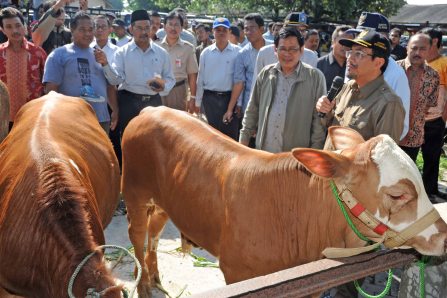
Jakarta (B2B) - Menteri Pertanian Suswono menyatakan sapi impor siap potong dijadwalkan masuk pasar pada akhir Juli, untuk menambah pasokan daging sapi nasional. Peternak lokal diharapkan mahfum bahwa langkah tersebut ditempuh pemerintah dalam upaya menstabilkan harga daging sapi yang melambung hingga Rp100 ribu per kilogram.
"Ini langkah darurat untuk memenuhi kebutuhan pasar dan stabilkan harga. Peternak lokal tidak perlu khawatir atas sapi impor siap potong ini, karena kondisinya darurat. Pemerintah tetap mempertimbangkan harga yang wajar dan keuntungan yang layak bagi peternak," kata Suswono usai Rapat Koordinasi Pangan di Kantor Kementerian Koordinator Perekonomian di Jakarta, Rabu (18/7).
Menurut Suswono, jumlah sapi siap potong yang akan diimpor bergantung dari kebutuhan pasar, selama masih terjadi kekurangan di pasar, maka impor akan terus ditambah.
"Intinya ini kan untuk kondisi darurat untuk stabilkan harga. Jadi kita tidak mematok pada jumlah tertentu," ujarnya.
Menurut Suswono, secara normal DKI Jakarta memerlukan 50.000 ton per tahun, atau rata-rata 4.000 ton per bulan. "Namun sekarang ini untuk memenuhi kebutuhan bulan Ramadhan."
Jakarta (B2B) - Minister of Agriculture (MOA) Suswono states cows import for slaughter, is schedule to market entry late July, to increase the supply of domestic beef. Local Local expects to understand government´s measures to stabilize beef prices rose Rp 100 thousand per kilogram.
"This is urgent to meet the market supply and stabilize prices. Local breeders do not fret, because an emergency. Government maintain reasonable prices and decent benefits for local breeders," said Suswono after a coordination meeting of food in office of the Coordinating Ministry for the Economy in Jakarta, Wednesday (18/7).
According to the MoA Suswono, the number of cows import depend market needs, if not, import will be add.
"The point is to stabilize the price of emergency conditions. We did not set a certain amount," he said.
He said the Jakarta normally require 50,000 tons per year, or an average of 4,000 tons per month. "But now is to meet the needs of Ramadan."