
Antisipasi Gejolak Harga Gabah, Mentan Gelar Rakor di Madiun
Indonesian Agriculture Minister Anticipate Fluctuations of Unhulled Rice Prices
Reporter : Gusmiati Waris
Editor : Cahyani Harzi
Translator : Dhelia Gani
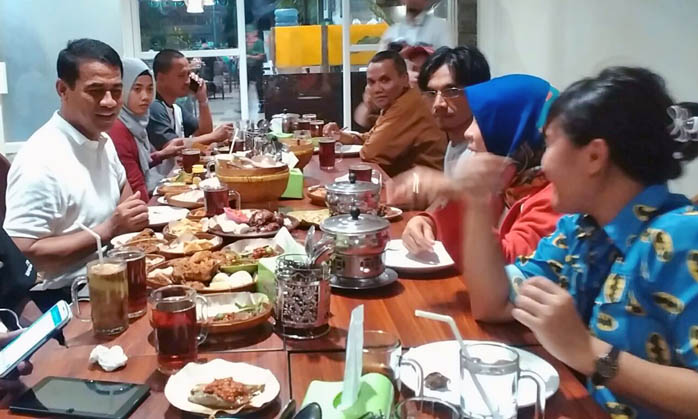
Madiun, Jawa Timur (B2B) - Menteri Pertanian RI Andi Amran Sulaiman pagi ini, Kamis (3/3) dijadwalkan menggelar rapat koordinasi dengan 10 bupati dan walikota di Jawa Timur, kepala dinas pertanian dan tanaman pangan, kepala Badan Urusan Logistik (Bulog) Jawa Timur, dan para komandan Kodim di wilayah Korem 081 Dhirotsaha Jaya Madiun di Madiun, Jawa Timur.
"Rapat koordinasi dilakukan terkait pengamanan harga gabah yang anjlok saat panen raya di sentra produksi di wilayah Madiun dan sekitarnya," kata Kepala Bagian Hubungan Masyarakat Kementerian Pertanian RI, Marihot H Panggabean kepada B2B di Madiun pada Rabu malam (2/3).
Menurutnya, daerah yang dimaksud meliputi sembilan kabupaten antara lain Pacitan, Ponorogo, Madiun, Magetan, Ngawi, Trenggalek, Tulungagung, Blitar, Nganjuk dan Kota Madiun. Selain ke-10 kepala daerah, rapat koordinasi dengan Mentan juga akan dihadiri oleh para kepala dinas pertanian, tanaman pangan dan hortikultura di daerah tersebut. Sementara dari pimpinan Bulog akan diwakili oleh kepala divisi regional Jawa Timur, dan kepala subdivisi regional Bulog Ponorogo dan Tulungagung. Turut hadir Komandan Korem 081 Dhirotsaha Jaya
Madiun dan 10 komandan Kodim terkait.
Anomali Harga
Dalam berbagai kesempatan, Mentan Amran Sulaiman menegaskan penanganan masalah pangan tidak dapat hanya didasarkan pada pergerakan harga dalam beberapa hari, karena dipengaruhi oleh opini.
"Kebijakan pangan tidak bisa dilakukan dengan menempuh jalan pintas, kemudian mengimpor beras sebagai satu-satunya solusi menstabilkan harga. Perlu dipahami trend harga dari waktu ke waktu, karena komoditas pangan dalam waktu tertentu pernah jatuh dan petani menderita rugi, sedangkan pada saat tertentu harga melonjak tinggi. Karakteristik jenis pangan dan fluktuasi harga ini turut berkontribusi terhadap inflasi inilah yang menjadikan pemerintah memberikan perhatian serius," kata Mentan seperti dilansir B2B pada 30 Desember 2015.
Menurutnya, fakta menunjukkan terjadi anomali harga beras di tingkat eceran dengan harga gabah di petani. Berdasarkan data harga beras per bulan di tingkat eceran sejak 2011 - 2015 diketahui bahwa harga beras setiap bulan cenderung naik walaupun pasokan berfluktuasi naik dan turun sesuai musimnya. Hal ini menunjukkan tidak ada korelasi antara pasokan dengan harga eceran beras.
"Kenaikan harga beras ini tidak dinikmati oleh petani. Harga cenderung tinggi ini bukan akibat kurangnya pasokan beras, melainkan faktor lain seperti pada 2015 tidak ada subsidi BBM sehingga biaya input naik, impor pangan dikendalikan, nilai kurs, inflasi, dan adanya ´kegagalan pasar´ di tingkat eceran. Mengatasi gejolak harga dalam kondisi pasar ´gagal´ ini semestinya dengan harga intervensi pemerintah sehingga terjadi pasar bersaing sempurna," ungkap Mentan.
Kondisi sebaliknya terjadi pada harga gabah di tingkat produsen. Pasar gabah di produsen pada saat musim panen raya, harga akan jatuh dan sebaliknya pada musim gadu, harga akan naik.
Kebijakan pemerintah melindungi petani sudah tepat dengan menetapkan Harga Pembelian Pemerintah (HPP) dan diikuti pembelian gabah/beras petani langsung oleh Badan Urusan Logistik (Bulog). Dengan demikian, produksi petani berupa padi dari Angka Ramalan (Aram) II tahun 2015 sebesar 74,99 juta ton, jagung 19,83 juta ton, dan kedelai 982,97 ribu ton atau masing-masing naik 5,85%, 4,34%, dan 2,93% dibandingkan 2014 sudah tentu meningkatkan kesejahteraan petani, karena petani menikmati harga yang wajar dan dilindungi oleh kebijakan HPP.
Parameter bahwa terjadi peningkatan kesejahteraan petani juga bisa dilihat dari Nilai Tukar Petani (NTP) nasional pada November 2015 sebesar 102,95 (di atas 100) dan lebih tinggi dibandingkan 2014. Selanjutnya, Nilai Tukar Usaha Rumah Tangga Pertanian (NTURTP) nasional pada November 2015 sebesar 109,38 atau naik 0,63% dibandingkan NTURTP bulan sebelumnya.
Madiun, Indonesia (B2B) - Indonesian Agriculture Minister, Andi Amran Sulaiman this morning, on Thursday (3/3) was scheduled to hold a coordination meeting with the 10 regents and mayors in East Java province, head of the department of agriculture and food crops, the head of the local Logistics Agency and the district military commander in the region.
"The coordination meeting to anticipate fluctuations of of unhulled rice prices during the rice harvest in Madiun and surrounding areas," Head of Public Relations of Agriculture Ministry, Marihot H Panggabean told B2B here on Wednesday night (2/3).
According to him, the areas includes nine districts namely Pacitan, of Ponorogo, Madiun, Magetan, Ngawi, Trenggalek, Tulungagung, Blitar, Nganjuk and Madiun. Will present the head of the department of agriculture, food crops and horticulture in the region. While Logistics Agency will be represented by the head of East Java region, and head of regional subdivision of Ponorogo and Tulungagung. Scheduled to attend the commander of the military region of Madiun and 10 district-level military commanders.
Anomalies in the Price
On many occasions, Minister Sulaiman confirms that handling food problem can not simply be based on the price movement within a few days, because it is influenced by the opinion.
"Food policy can not be done by taking a shortcut, and then rice import as the only solution to stabilize prices. It must be understood the price trend over time, because the food commodities at a certain time falling and farmers lose money, while at other times of food price rises. Characteristics of food and price fluctuations have contributed to inflation so that the government give serious attention," he said.
A number of facts proving the case anomalies rice prices at the retail level with the unhulled rice prices in the farmer. Based on data from the monthly rice prices at the retail level since 2011 - 2015 note that prices tend to rise every month even though supplies fluctuate up and down according to the seasons. This proves there is no correlation between the supply of the retail price of rice.
The price increase is not profitable for farmers. Prices tend to be high is not because of lack of supply, but other factors such as in 2015 there was no fuel subsidies so that input costs rose, rice imports are controlled, exchange rates, inflation, and the ´market failure´ at the retail level. Overcome the fluctuations in the price of government intervention would push the price back to normal.
The opposite occurs in unhulled rice prices for farmers. The unhulled rice market in farmers during the harvest season, the price will fall, and vice versa in the planting season, prices will rise.
Government policies to protect farmers have the right to set the Government Purchase Price called the HPP, and followed by the purchase of paddy/rice farmers directly by National Logistics Agency called the Bulog. Thus, food production is based on Forecast Figures II in 2015 amounted to 74.99 million tons, 19.83 million tons of corn, and soybeans 982.97 thousand tons, an increase of 5.85%, 4.34% and 2.93% compared 2014 will improve the welfare of farmers, because farmers get fair prices and protected by the pricing policy of the government.
Parameters that an increase in the welfare of farmers look at the exchange rate of the national farmers in November 2015 amounted to 102.95 (over 100) and higher than 2014. Furthermore, the exchange rate of the national agricultural households in November 2015 amounted to 109.38or an increase 0.63 % compared to the previous month.