
Cabai Merah Keriting dari Lombok Terbang Sampai Jauh ..... Mendarat di Sumatera
Chili Needs in Indonesia`s Sumatra Supplied from Lombok
Reporter : Gusmiati Waris
Editor : Cahyani Harzi
Translator : Dhelia Gani
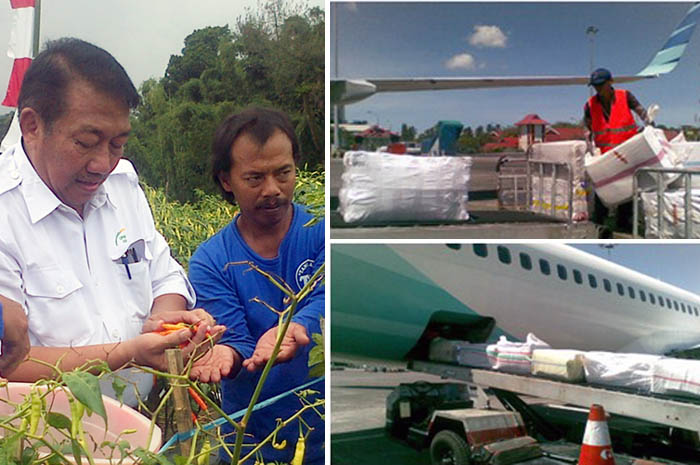
Lombok Timur, NTB (B2B) - Keengganan warga di Provinsi Nusa Tenggara Barat (NTB) Timur untuk mengonsumsi cabai merah keriting ternyata menjadi berkah bagi petani setempat karena dapat memasarkan hasil produksi pertaniannya ke Provinsi Kepulauan Riau dan Bangka Belitung dengan pesawat terbang.
"Cabai di Lombok Timur itu unik, semua jenis tanaman cabai ditanam di sini, tapi orang Lombok tidak makan cabai merah keriting dan dijual ke Sumatera seperti Batam dan Pangkalpinang, dikirim setiap hari dengan pesawat," kata Kepala Seksi Hortikultura di Dinas Pertanian Kabupaten Lombok Timur, Neni Yuliawati kepada B2B di Lombok Timur pada Sabtu (18/6).
Menurutnya, petani di sentra produksi cabai di Kecamatan Sembalun dan Masbage terbiasa memanfaatkan angkutan kargo dengan pesawat terbang untuk ´mengekspor´ produksinya ke Sumatera.
Sementara cabai besar dikirim ke Pulau Jawa untuk memenuhi kebutuhan bahan baku produsen sambal botol terkemuka dari kelompok usaha ABC dan Indofood, dan harga jual tidak berfluktuasi seperti di tingkat konsumen yang saat ini di kisaran Rp5.000 per kg di Lombok Timur.
"Harga sudah ditetapkan sesuai kesepakatan produsen sambal botol dengan petani," kata Neni.
Komoditas Strategis
Direktur Jenderal Hortikultura di Kementerian Pertanian RI, Spudnik Sujono menyambut baik terhadap ´hikmah´ warga Lombok Timur tidak mengonsumsi cabai merah keriting sehingga dapat menutupi kebutuhan di provinsi lain.
"Tujuan kunjungan kerja ke sini bersama tim dari Ditjen Hortikultura untuk mengetahui kondisi di sentra produksi cabai dan mendorong petani untuk mencari solusi terbaik dari fluktuasi harga khususnya saat panen raya," kata Spudnik.
Spudnik menambahkan, cabai ditetapkanKementan sebagai komoditas strategis sebagaimana halnya padi, jagung, kedelai, daging sapi, gula dan bawang merah karena dibutuhkan konsumen setiap hari, sehingga para petani harus melakukan pertanaman setiap bulan untuk memastikan tersedianya pasokan cabai di seluruh Indonesia.
"Kebiasaan masyarakat Indonesia mengonsumsi cabai untuk dijadikan sambal dan penganan lainnya membuat para petani harus melakukan pertanaman setiap bulan, dan tentunya petani juga mendapatkan keuntungan lantaran hasil pertaniannya disukai konsumen," kata Spudnik.
East Lombok, West Nusa Tenggara (NTB) - The reluctance of people in the West Nusa Tenggara province to consume curly red chili turned out to be a blessing for the local farmers, because it can market their products to the Riau Islands province and Bangka Belitung province by plane, according to the local government official.
"Chili in East Lombok is unique, all kinds chilli plants planted here, but the people here do not want to eat red chili curls that were sent by plane to Sumatra Island for sale in Batam and Pangkalpinang city," said the Head of Horticulture Section of East Lombok Agriculture Office, Neni Yuliawati to the B2B here on Saturday (18/6).
According to her, the farmers in chili production centers in Sembalun and Masbage utilize cargo transportation by plane to send the chili to the Sumatra Island.
While the great chili was sent to Java Island to meet production needs condiment bottles for ABC and Indofood business group, and the price does not fluctuate as in the level of today´s consumers, in the range of 5,000 rupiah per kg in East Lombok.
"The price is set according to the agreement between farmers and producers chili sauce bottles," she said.
The Strategic Commodities
Director General of Horticulture, Spudnik Sujono welcomed the ´wisdom´ of people in East Lombok not consume curly red chili so as to meet the needs of consumers in other provinces.
The purpose of the working visit in East Lombok with a team from the Directorate General of Horticulture to determine the condition in chili production centers, and encouraging farmers to find the best solution against price fluctuations, especially at harvest period," Sujono said.
He added, the chili has been established by the Indonesian Agriculture Ministry Indonesia as a strategic commodity as well as rice, corn, soybeans, beef, sugar and shallot because it takes consumers every day, so farmers must plant every month to ensure available supply for domestic needs.
"The habit of Indonesian people eating the chili to be made into chili sauce and other foods force the farmers must plant every month, and of course the farmers also benefit because their agricultural products needed by consumers," Sujono said.