Nilai Tukar Usaha Petani 2015 Capai 107,44, Naik 1,40% dari 2014
Indonesian Farmers` Purchasing Power Hike 1.40% than 2014
Reporter : Gusmiati Waris
Editor : Cahyani Harzi
Translator : Dhelia Gani
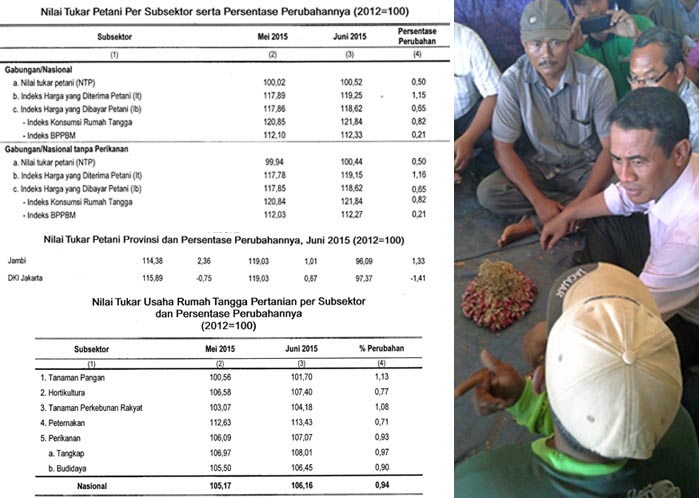
Jakarta (B2B) - Data Badan Pusat Statistik (BPS) 2016 melansir Nilai Tukar Usaha Petani (NTUP) secara nasional pada 2015 mencapai 107,44 atau naik 1,40% dibandingkan NTUP 2014 sebesar 106,04, yang diperoleh dari perbandingan indeks harga yang diterima petani (lt) terhadap indeks harga yang dibayar petani (lb), merupakan salah satu indikator untuk melihat tingkat kemampuan/daya beli petani di pedesaan.
Kepala Pusat Data dan Sistem Informasi Pertanian (Pusdatin) Suwandi merinci peningkatan NTUP nasional 2015 tanaman pangan naik 2,91%, peternakan meningkat 2,03% dan hortikultura naik 1,35% sementara perkebunan turun 2,14% akibat sebagian besar produknya berorientasi ekspor terkena imbas krisis global.
Peningkatan NTUP tersebut terkait dengan Angka Ramalan II (Aram II) BPS 2015 yang menyatakan peningkatan produksi pangan: padi meningkat 5,85%, jagung 4,34%, dan kedelai 2,93% dibandingkan 2014. Begitu pula dengan produksi cabai, bawang merah, tebu dan lainnya juga meningkat didukung penanganan aspek hilir dan tata niaga pangan yang diyakini akan berkontribusi langsung terhadap peningkatan pendapatan dan kesejahteraan para petani di seluruh Indonesia.
"Sejalan dengan NTUP, maka indikator Nilai Tukar Petani tahun 2015 juga menunjukkan peningkatan, untuk tanaman pangan meningkat 1,48 persen, peternakan naik 0,75 persen sementara perkebunan turun 4,12 persen akibat imbas pasar global," kata Suwandi melalui pernyataan tertulis pada Jumat (22/1).
Dia mengingatkan, penurunan NTP dan NTUP perkebunan 2015 mengisyaratkan untuk segera menuntaskan perdagangan sawit, karet dan lainnya. Pasalnya, penurunan harga yang tajam telah memukul pendapatan subsektor perkebunan sehingga tergelincir pada garis kemiskinan, dan akibatnya peningkatan produksi kurang berdampak pada pendapatan petani apabila instansi pemerintah dan lembaga terkait yang menangani ekspor perkebunan belum mampu mengatasi masalah ini.
Suwandi mengharapkan para pemerhati pertanian agar menganalisis secara lebih komprehenshif dan mendalam terhadap indikator NTP dan NTUP, karena bila hanya melihat angka agregat NTP 2015 menurun 0,44% tanpa mendalami secara rinci sumber penurunan komponen indikatornya, maka akan salah dalam mencari solusinya.
Menurutnya, indikator NTP dapat menggambarkan tingkat kesejahteraan petani, NTP dihitung dari rasio indeks yang diterima petani dengan indeks yang dibayarkan petani. Namun indikator NTP memiliki beberapa kelemahan di antaranya indeks yang dibayarkan petani mencakup seluruh aspek pengeluaran rumah tangga petani sehingga tidak mencerminkan pengeluaran riil untuk usaha taninya, sebagai respon atas beberapa kelemahan NTP maka digunakan juga indikator NTUP seperi disebut di atas.
Kepala Bagian Hubungan Masyarakat (Kabag Humas) Kementerian Pertanian RI, Marihot H Panggabean menambahkan peningkatan NTP dan NTUP menunjukkan kerja keras petani yang didukung para penyuluh pertanian, Tentara Nasional Indonesia (TNI), Kontak Tani Nasional Andalan (KTNA), Himpunan Kerukunan Tani Indonesia (HKTI), perguruan tinggi, instansi pemerintah, para legislator di Komisi IV DPR.
"Dukungan yang diberikan secara bersama-sama memacu peningkatan produksi guna mencapai kedaulatan pangan sesuai amanat Nawacita," kata Marihot.
Jakarta (B2B) - Indonesian Statistics Agency called the BPS declared the Farmers Business Exchange (NTUP) nationally in 2015 to reach 107.44, up 1.40% compared NTUP 2014 at 106.04, which is obtained from the comparison of the index of prices received by farmers (lt) index of prices paid to farmers (lb), is one indicator of the ability to see the level/purchasing power of farmers in the rural areas.
The Agriculture Ministry´s Data and Information System for Agriculture revealed national food production in 2015 rose 2.91%, livestock rose 2.03%, and the horticulture rose 1.35%, while estate crop production fell 2.14%, as most of its production to export commodities affected by the global crisis, said Suwandi as head of data centers dan information system.
Suwandi added, it was related to with the BPS Forecast Figures 2015 reported that the increase in food production Indonesia: rice increased by 5.85%, corn rose 4.34%, and soybeans rose 2.93% compared to 2014. Similarly, the production of chilli, shallots, sugar cane and others also increased supported downstream aspects of the handling, and food trade system that is believed to contribute to improving the incomes and welfare of farmers across Indonesia.
"In line with the NTUP, then the exchange rate of farmers called the NTP in 2015 also showed an increase, rising to 1.48 percent of food crops, livestock rose 0.75 percent, while estate crop production fell 4.12 percent due to the impact of global markets," Suwandi said through a written statement here today.
He reminded, the decline in estate crop production in 2015 suggests to immediately resolve trading issues plantation products. The price decline hit the income of farmers, the government and related institutions in the plantation subsector must immediately find a way out of this problem.
Suwandi expect the support of all parties to analyze comprehensively the indicators of the NTP and the NTUP, as if just looking at aggregate figures in 2015 showed a decrease of 0.44%, because if you do not understand the components of the indicator, it would be wrong to find a solution.
According to him, an indicator of the NTP will provide clues about the welfare of farmers, because the NTP is calculated from the ratio of the index received by farmers, with the index paid by farmers. However, the NTP indicators has a weakness, such as paid index covering all aspects of household spending so that farmers do not reflect the real expenditure of the farmer, to respond then use also indicator the NTUP as mentioned above.
Spokeperson of the ministry, Marihot H Panggabean added added these increases shows the hard work of farmers supported by agricultural extension workers, the Indonesian army, an association of farmers, the unity of Indonesian farmers, universities, government agencies, and lawmakers at the Commission IV of the House of Representatives.
"The support to encourage increased agricultural production to achieve food sovereignty as targeted from the government," Mr Panggabean added.