
Spudnik Sujono Hampir Sepekan di Brebes Kendalikan Hama Bawang Merah
The Hard Work of Indonesian Govt Supporting Farmers to Control Pests of Shallots
Editor : M. Achsan Atjo
Translator : Dhelia Gani
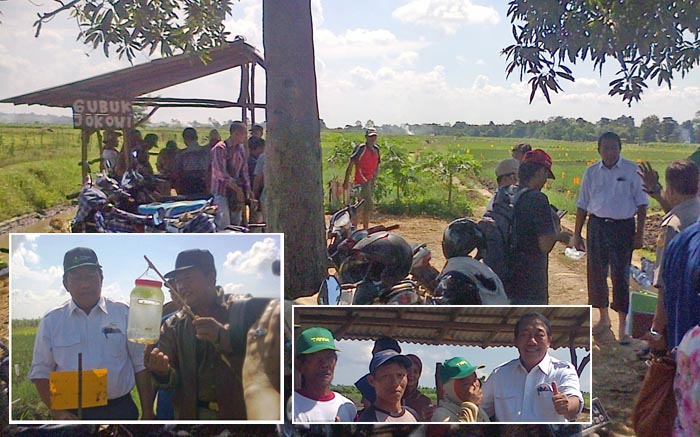
INSTRUKSI Presiden RI Joko Widodo kepada jajarannya di kementerian teknis untuk mengerti kondisi lapangan bukan dari belakang meja, dibuktikan oleh Direktorat Jenderal Hortikultura di Kementerian Pertanian (Kementan) yang mendukung petani bawang merah di Kabupaten Brebes, Provinsi Jawa Tengah mengatasi organisme pengganggu tanaman (OPT).
"Saya berada di sini praktis hampir tujuh hari, sejak Rabu pekan lalu (13/4) setelah Presiden Jokowi berkunjung ke sini dan menemukan banyak hama ulat di daun bawang merah, Mentan Amran Sulaiman menelepon saya langsung ke lokasi untuk memimpin tim pengendalian OPT," kata Direktur Jenderal Hortikultura, Spudnik Sujono kepada pers pada Senin pagi (18/4) di Desa Luwung Gede, Kecamatan Larangan, Kabupaten Brebes.
Spudnik tidak sendiri, dia mengerahkan seluruh pejabat terkait di jajarannya antara lain Direktur Sayuran dan Tanaman Obat, Yanuardi MM; Kepala Subdirektorat Aneka Cabai dan Sayuran Buah Ditjen Hortikultura, M Agung Sunusi; Kepala Subdit Bawang dan Sayuran Umbi, Sukarman dan puluhan karyawan di Ditjen Hortikultura yang dinamai tim oranye untuk mendukung pengendalian hama bawang merah. Sementara para jurnalis dari Jakarta didampingi oleh Kepala Subbagian Humas Ditjen Hortikultura, Ina Ngana.
Menurut Spudnik, hingga saat ini telah dipasang 965 buah likat kuning di lahan bawang merah, diikuti penyemprotan pupuk daun dan zat pengatur tumbuh di lahan petani, sanitasi di sekitar areal bawang merah dilakukan dengan penyemprotan herbisida, pengendalian secara mekanik dengan cara pembuntitan dengan pengumpulan kelompok telur dan ulat bawang.
"Kami melakukan pendampingan kepada para petani agar mereka melakukan budidaya bawang merah secara baik dan benar, dengan mempertimbangkan waktu tanam, benih unggul, dan menerapkan perangkap sederhana untuk mengurangi populasi OPT, tapi petani di sini maupun di daerah lain lebih mengandalkan pestisida karena nggak mau repot," kata Spudnik.
Hal itu dibenarkan oleh Kepala Pengendali OPT dari Dinas Pertanian Provinsi Jawa Tengah, Maryadi yang mendorong para petani untuk mengatasi OPT menggunakan peralatan sederhana yang mudah dibuat dan harganya murah yakni likat kuning atau yellow trap, memanfaatkan botol plastik lalu dicat dengan warna oranye atau kuning kemudian dilumuri lem tikus.
"Alat sederhana lain adalah menggunakan seng berukuran 10x10 cm yang dicat dengan warna kuning atau oranye sebelum dilapisi lem tikus, warna terang menarik perhatian hama untuk hinggap lalu mati setelah terjerat lem tikus," kata Maryadi.
Dia menambahkan bahwa pihaknya sejak 1996 telah mendorong para petani bawang merah di Brebes untuk menerapkan perangkap hama sederhana, tapi mereka memilih pestisida karena dianggap lebih praktis meskipun mereka harus membeli dengan harga cukup mahal.
"Akibatnya bisa dilihat dari penggunaan pestisida berlebihan, tidak ada ikan air tawar yang hidup di saluran air-saluran air pada lahan bawang merah atau saluran irigasi tersier di kawasan ini karena sudah tercemar pestisida," kata Yanuardi MM.
Pestisida Oplosan
Fakta tersebut tidak ditampik oleh Kiswo, petani bawang merah di Desa Luwung Gede, Kecamatan Larangan, Kabupaten Brebes yang mengakui kerap mengoplos berbagai macam merek pestisida.
"Saat mulai masa tanam bawang merah biasanya ada sales dari perusahaan pestisida datang ke sini. Mereka bilang, pakai ini, takarannya segini. Kita ikuti saja," kata Kiswo, yang sempat berbincang dengan Presiden Jokowi pada kunjungan ke Brebes pada Senin (11/4).
Kiswo dan petani lain juga kerap mendatangi toko pestisida di kota kecamatan untuk membeli bahan kimia pemberantas hama. "Kami bilang masalahnya begini di toko pertanian lalu dikasih pestisida yang katanya ampuh untuk memberantas hama."
Menurut Spudnik, penggunaan pestisida tidak dilarang namun dengan takaran dan waktu penyemprotan yang tepat, karena kalau berlebihan malahan membuat hama menjadi kebal terhadap pestisida.
"Petani mengira semakin banyak campuran pestisida dan sering disemprot akan lebih cepat memusnahkan hama padahal sebaliknya yang terjadi, karena ulat yang bersembunyi di dalam daun tidak terkena semprot. Sebaiknya menggunakan cara tradisional dengan membersihkan daun seperti dilakukan nenek moyang kita dahulu," kata Spudnik.
THE INSTRUCTIONS of Indonesian Presiden Joko Widodo to his subordinates in the technical ministries to understand the condition of the field and and not from behind the desk, implemented by the Agriculture Ministry´s Directorate General of Horticulture which supports the shallot farmers in Brebes district of Central Java province for the control of plant pests.
"I´m here almost seven days, since last Wednesday (13/4) after President Widodo visiting here, and find pests on the leaves of shalots, and Agriculture Minister Andi Amran Sulaiman then ordered me directly to the location to lead a team of shallot pest control," Director General of Horticulture, Spudnik Sujono told the press on Monday morning (4/18) in Luwung Gede village of Larangan subdistrict.
Mr. Sujono not alone, he mobilize all relevant officials in his office, among others, the Director of Vegetable and Medicinal Plants, Yanuardi MM; deputy head of the sub-variety of chili and vegetables fruit, M Agung Sanusi; deputy head of the sub onions and tuber vegetables, Sukarman and dozens of employees were named as the orange team to support the pest control of shallots. While journalists from Jakarta accompanied by the head of public relations subsections, Ina Ngana.
According to Mr. Sujono, his team has installed 965 pieces of sticky yellow in the land shallots, followed by spraying foliar fertilizers and growth regulators in farmers´ fields, sanitary areas surrounding the shallots is done by spraying herbicides, control mechanically by pulling leaves to collect groups of eggs and caterpillars shallots.
"We provide guidance to the farmers so that they do the shallots cultivation well and properly, taking into consideration planting time, superior seeds, and trapping simple to reduce pest populations, but farmers here and in other areas rely more on pesticides because it is more practical," he said.
It was justified by the Head of Controlling Pests in the Provincial Agriculture Office of Central Java, Maryadi encourage farmers to overcome the pest using simple tools that are easy to make and cheap price that is sticky yellow or yellow trap, with the use of plastic bottles and then painted with the color orange or yellow then smeared with glue rat.
"Another simple equipment using the zinc size of 10x10 cm were painted with yellow or orange before glue rat coated, bright colors attract pests to perch and died after ensnared by glue rat," said Maryadi, who uses one name like many Indonesians.
He added that his office since 1996 has pushed the shallot farmers in Brebes to implement a simple pest traps, but they chose pesticide because it was considered more practical even though they had to buy at a price quite expensive.
"The result can be seen from the excessive use of pesticides, there is no freshwater fish that live in the waterways-drains on land shallots or tertiary irrigation canals in this area because it has been polluted by pesticides," said Yanuardi MM.
Dangers of of Pesticides
The fact was not rebuffed by Kiswo, shallot farmer in Luwung Gede village of Larangan subdistrict, Brebes which admitted often mixing different kinds of pesticides.
"Usually at the beginning of the planting season, sales of pesticide companies to come here. They say, this pesticide is right. Yeah we follow what they say," said Kiswo, who had talked with President Widodo on a visit to Brebes district on Monday ago (11/4).
Kiswo and other farmers also often buy pesticides in the the chemical store. "We say the problem like this then was given pesticide, he said effective to eradicate the pest."
"Farmers often sprayed with pesticides have thought to be faster eradicate pests whereas the opposite is happening, because the caterpillars hiding in the leaves are not exposed to the spray. We recommend farmers use the traditional way to clean the leaves like ancestors," Mr Sujono said.